The treasurer has possession of accounting software. The president has a folder with governing documents on cloud storage. Residents have their emails spread across individual inboxes. Someone has photographs of violations on their phone. Another board member has the password for the site.
Everything exists in an technical sense
The right choice is a different thing.
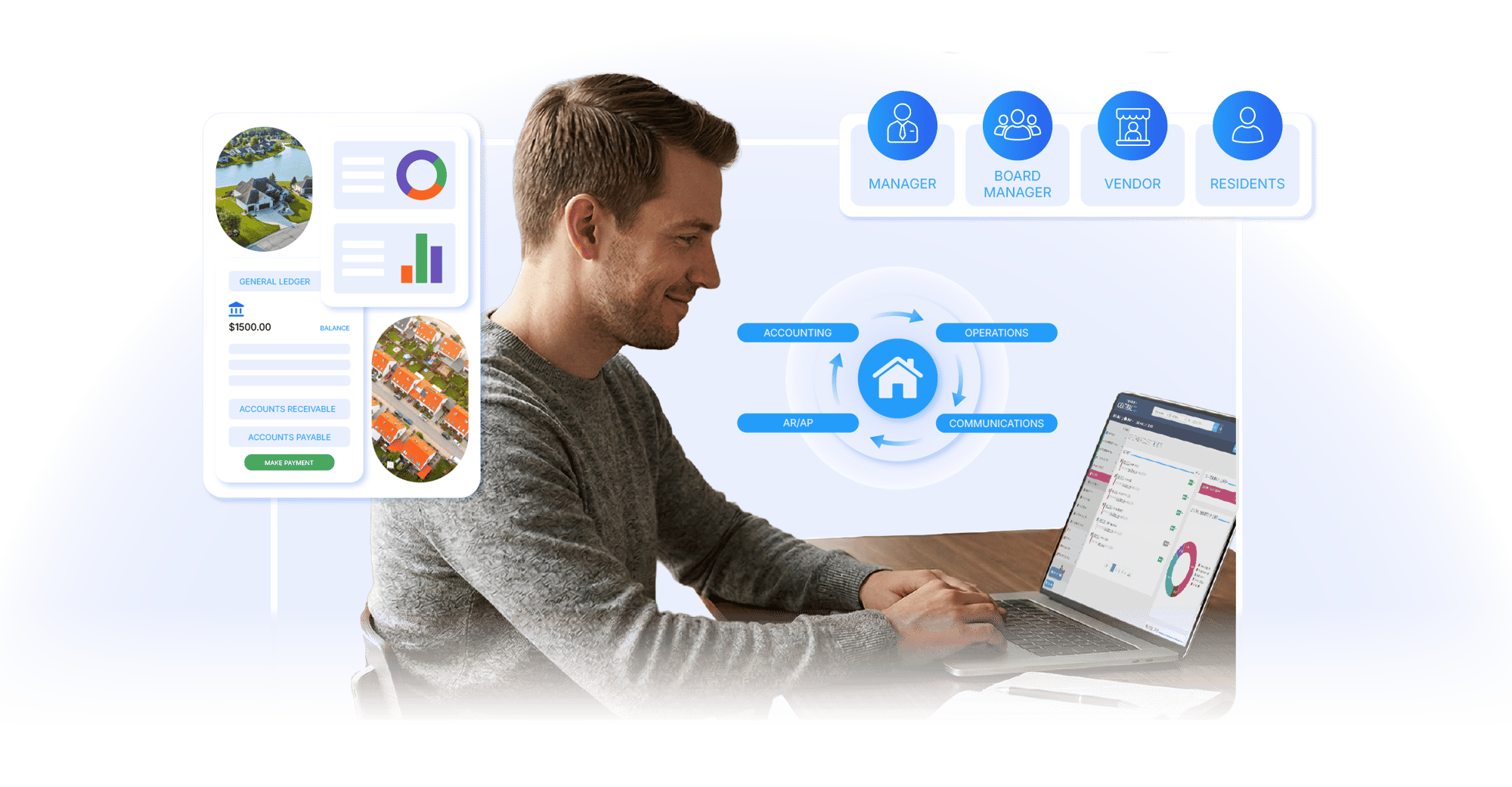
The complexity of administration for a homeowners’ association that is managed by itself can increase over time, one small solution at a particular moment. A spreadsheet helps with one issue. Another problem is solved by an online chat. The board adds online payment software, shared software for storage, accounting software and websites to its list of communication tools.
Volunteers will end up spending as many hours as they do managing tools, just as they manage their communities.
The problem isn’t with self-management.
Self-management gives an association complete control over its operations. The difficulty is that the board members are volunteers, not full-time administrative personnel.
They must still collect assessments, keep track of the owner’s information, keep track of the expenses, talk to residents, document violations, file files make reports, and archive records for future boards.
Good HOA management software can reduce that administrative load without removing control from the association.
Perfect HOA does this by the fusion of all records (units finance, financials, payments and communications) and documents, as well as violations, resident portal and meeting minutes into an online system.
Think about what happens to a homeowner when they move.
Instead of changing an address in one spreadsheet, updating another contact list, examining a different payment system, and manually changing access to the website central records could provide the information of the owner for the organization’s administrative functions.
The Treasurer shouldn’t need to rebuild the financial picture.
HOA finances cause a similar problem when information is fragmented.
Banking transactions are conducted in one location. Assessments are paid in different places. The budget could be simply a spreadsheet. When someone asks how actual spending compares with the annual budget the treasurer needs to make up the answer.
HOA accounting software becomes much more useful when bookkeeping is connected to the association’s everyday activity.
Perfect HOA can sync bank and card activities with Plaid, classify transactions, and produce reports including Profit & Loss, Budget and Actual. Actual, and cash flow. Reserve, operating and special-assessment accounts can be tracked in separate ways.
It’s important to know this because HOA accounting isn’t only about the year-end financials. A board might want to determine whether landscaping costs are running above budget, what amount is left in a reserve fund or if assessment collections are keeping pace with planned expenses.
The simpler the answers are to locate the less dependent the community becomes to one individual’s private spreadsheet.
Residents shouldn’t be required to inquire Where Everything Is
Centralization is a way to enhance the quality of life for residents.
Be aware of the questions that an HOA is regularly asked. Where are the community documents? Have I received my money? What is the most recent notice? Where can I find more details about the Association?
A good HOA website developer must do more than just create an official website for the public. Perfect HOA connects the community website to a portal for residents in order that the owner’s information and documents are able to be linked to the management system that is in place.
It is no longer necessary to maintain two sets of information one for the website and one for a board.
Residents are also able to look into a rational way before contacting the board member for a service that is already in.
When things go wrong the records are crucial
It’s usually months after the initial test when an HOA administrative system is put to the test.
A resident contests the violation. Someone inquires if a notice was sent. The new board of directors is trying to understand the decision that was made many years ago. An auditor needs financial information. Unexpectedly, a treasurer leaves.
Memory is no longer sufficient.
Perfect HOA maintains communications histories and delivery details, as well as documents, and timelines of violations. Photographic evidence including notices of escalation fines, and other information could be included in an incident rather than having to organize it from scattered emails.
Board meetings can also create records which need to be preserved by someone. Meeting minutes that are created by AI could help reduce the time and effort required to convert a long meeting into a practical written record.
Self-managing an HOA requires people to make choices. Software shouldn’t be able to take over this obligation.
The detective work needs to be taken away.
If all the relevant information – the resident’s information and financial records, as well as payments as well as violations and documents is in one location, board members are less likely to inquire “Who has it?” and can focus on the actual issue at hand.
This is the best automation for a volunteer board.